
Online peptides have made it easier for laboratories and researchers to explore materials relevant to different areas of scientific investigation. At the same time, having more options available means researchers need a practical process for deciding which materials fit their project requirements.
A useful sourcing process starts before a particular product is selected. Researchers can define what their project requires, identify the exact material needed, consider laboratory storage capabilities, review supplier information, and account for institutional requirements. Taking these steps can make sourcing more organized and reduce reliance on last-minute decisions.
At Research Purpose Labs, we believe access to clear, research-focused information can support that process. The goal isn’t simply to find a peptide listing. It’s to understand whether the information available aligns with the requirements of a particular laboratory project.
Key Takeaways
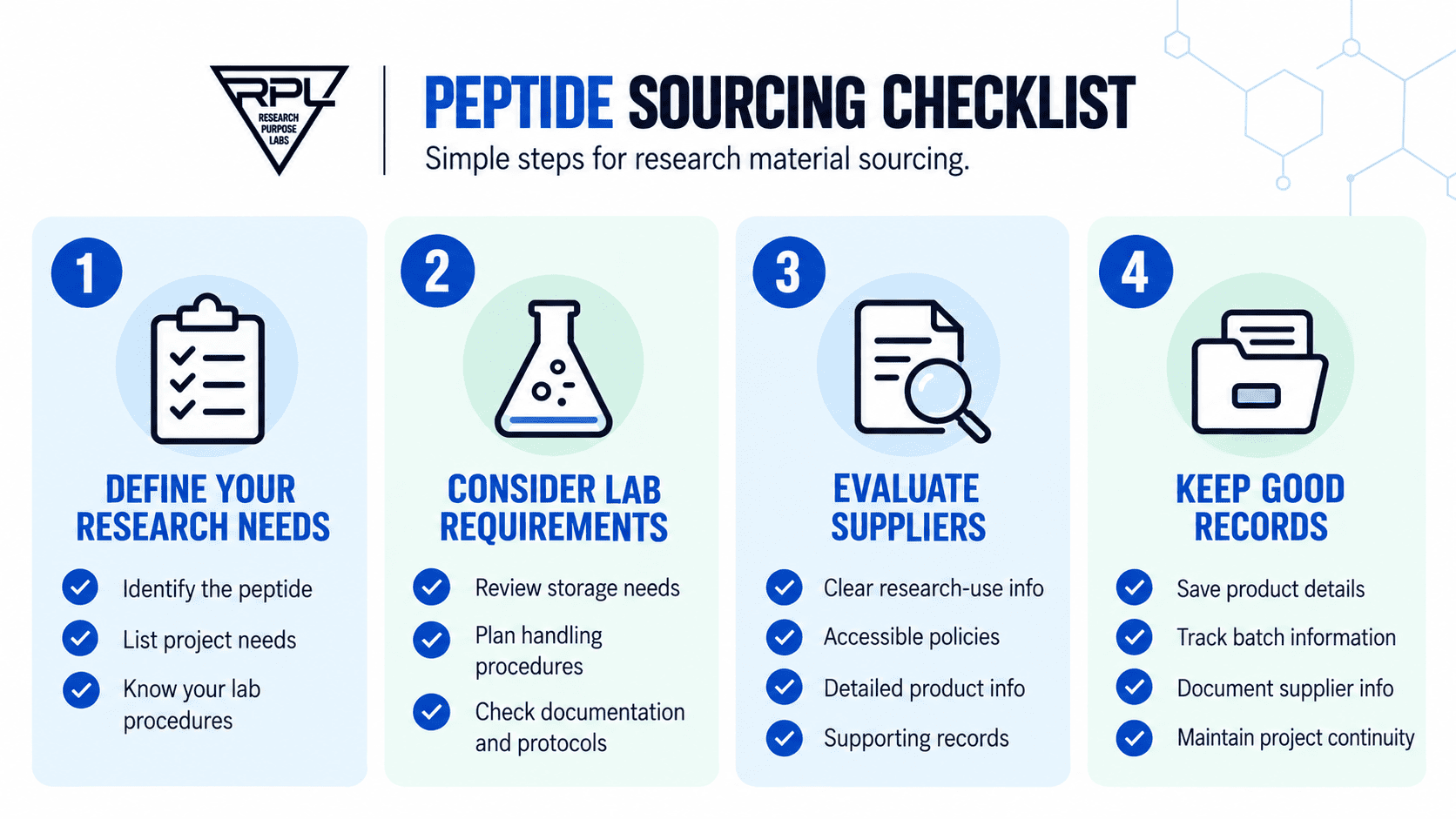
- Define your research needs before reviewing products. Knowing the exact peptide, project requirements, and relevant laboratory procedures can make the sourcing process more focused.
- Consider practical laboratory requirements early. Storage capabilities, handling procedures, documentation needs, and internal protocols can affect whether a material fits a particular project.
- Evaluate suppliers as part of the sourcing process. Clear research-use information, accessible policies, product details, and supporting records give researchers more information to consider.
- Keep records of sourcing decisions when appropriate. Organized product, batch, and supplier information can make it easier to maintain continuity throughout a research project.
Contact Us Today!
Start With the Research Question
Before searching through peptide products, begin with the project itself.
What is the research question? Which material does the protocol require? Are there particular specifications that matter to the project?
Starting here helps researchers avoid selecting a material simply because its name appears relevant. Individual peptides can differ in structure and characteristics, so identifying the exact material required by the research protocol is an important first step.
This also provides a framework for evaluating the information encountered later. Instead of asking whether a product page looks convincing, researchers can ask a more useful question: does the information provided correspond with what this project requires?
Think About Laboratory Requirements
Sourcing isn’t separate from what happens inside the laboratory.
Before obtaining research materials, consider whether your laboratory has appropriate procedures for receiving, documenting, storing, and handling them. Product-specific information may indicate certain storage recommendations, but laboratories can also have established institutional protocols.
Thinking about these practical details early can help avoid unnecessary complications after materials arrive.
Documentation requirements are another consideration. Depending on the laboratory or institution, researchers may need to maintain records associated with materials used in a project. Knowing those requirements beforehand makes it easier to determine what information should be collected during sourcing.
Create Criteria Before Comparing Suppliers
Searching for online peptides without predefined criteria can quickly turn into comparing dozens of pages that present information in different ways.
A simple set of research criteria can make the process more manageable.
Researchers might consider whether a supplier clearly identifies its products, provides intended-use information, explains relevant storage recommendations, makes available supporting records, and offers a way to request clarification.
The criteria should reflect the needs of the project rather than promotional language.
Price or presentation alone provides limited information about whether a material aligns with a laboratory’s requirements. A more useful comparison considers the information researchers actually need to review.
Check Whether the Intended Use Fits
Intended use deserves particular attention when sourcing research materials.
Peptides can appear in discussions involving laboratory research, cosmetics, pharmaceuticals, healthcare, and other fields. Those contexts have different considerations and shouldn’t be treated as interchangeable.
If a peptide is presented for laboratory research, researchers should evaluate it within that stated context.
This distinction also applies to information found elsewhere online. A scientific publication discussing a peptide does not automatically change the intended use of a particular product, and product information should not be interpreted as medical guidance.
Questions concerning diagnosis, treatment, personal use, or individual health decisions should be directed to appropriately qualified healthcare professionals.
Plan for Receiving and Recordkeeping
The sourcing process doesn’t necessarily end once a material has been selected.
For laboratories that maintain research records, it can be useful to establish a consistent process for documenting incoming materials. Depending on institutional procedures, this might involve recording product identification, supplier information, lot or batch references, receipt dates, or related documentation.
Why does this matter?
Research projects can extend over time, and materials may be obtained in different batches. Keeping organized records can make it easier to identify which material was associated with a particular stage of a project.
Individual laboratories should follow their own institutional policies and applicable requirements regarding recordkeeping.
Consider Batch Information in Your Workflow
Batch or lot information can provide an additional reference point when working with research materials.
Where this information is available, researchers can keep it associated with relevant product records. If supporting documentation is batch-specific, maintaining those records together can make them easier to reference later.
This doesn’t mean that a batch number alone determines quality or research suitability. Rather, it is one piece of identifying information that can help laboratories organize their materials.
Good recordkeeping is often about maintaining context. Product identity, batch information, supplier records, and project documentation can work together to create a clearer history of the materials involved in research.
Avoid Making Decisions From One Detail
A common challenge with sourcing is giving too much weight to a single piece of information.
A professional-looking website doesn’t answer every question about a material. Neither does one analytical result, one scientific paper, one product specification, or one supplier statement.
Researchers can instead consider the information collectively.
Does the material correspond with the project’s requirements? Is its intended use clear? Are relevant product details available? Does the laboratory have appropriate procedures for handling the material? Are there institutional or regulatory considerations that need attention?
This broader view makes sourcing less about finding one reassuring claim and more about determining whether the available information fits the research process.
Keep Institutional Requirements in the Process
Laboratories don’t operate in isolation from their institutions or jurisdictions.
Depending on the type of research being conducted, there may be internal procedures, professional standards, regulatory requirements, or other rules governing how materials are obtained and managed.
These requirements can vary considerably. Researchers should therefore consult the policies relevant to their own institution and work rather than assuming a general online guide applies universally.
Building these considerations into the sourcing process from the beginning can be easier than addressing them after a material has already been selected.
Build a Repeatable Sourcing Routine
Once researchers establish a sourcing process that works for their laboratory, it can be useful to make it repeatable.
Begin with the research protocol. Identify the exact material required and establish practical criteria. Review intended use and relevant product information. Consider laboratory storage and handling procedures, then account for documentation and institutional requirements.
After materials are obtained, maintain appropriate records according to laboratory procedures.
A repeatable routine can make future sourcing more organized. It can also reduce the temptation to make decisions based primarily on whichever product description happens to appear first in a search.
Contact Us Today!
Find Online Peptides for Research at Research Purpose Labs
Researchers exploring online peptides can use Research Purpose Labs as a resource for research-focused product information. Our goal is to make relevant product details available so researchers can evaluate materials within the context of their own laboratory projects.
Explore Research Purpose Labs to review available peptide materials and related product information. Before selecting any material, consider your research protocol, stated intended use, laboratory procedures, institutional policies, and applicable requirements.
A thoughtful sourcing process starts with knowing what your project needs—and taking the time to evaluate whether the available information aligns with those needs.
Frequently Asked Questions
Q: What should researchers determine before sourcing peptides?
A: Start with the research protocol and identify the specific material the project requires. Laboratory procedures, storage capabilities, documentation needs, and institutional requirements should also be considered.
Q: Why should researchers establish sourcing criteria?
A: Predefined criteria make it easier to compare information consistently. They also keep the focus on project requirements rather than relying primarily on promotional descriptions or presentation.
Q: Why does intended use matter when researching online peptides?
A: Intended use establishes the context in which a product is presented. A product identified for laboratory research should be evaluated within that context rather than automatically associated with medical, personal, or other applications.
Q: Is batch information useful for laboratory research?
A: Batch or lot information can help identify and organize research materials. Where supporting records are batch-specific, keeping the information together can provide useful continuity throughout a project.
Q: Should laboratories keep records of sourced research materials?
A: Recordkeeping practices depend on the laboratory, institution, and applicable requirements. Where records are required or appropriate, maintaining relevant product and batch information can help preserve context throughout a research project.
Q: What makes a peptide sourcing process more organized?
A: Start with clearly defined research needs, establish evaluation criteria, consider laboratory requirements, review available product information, and account for institutional procedures. Using the same framework consistently can make future sourcing decisions easier to manage.
No comment