
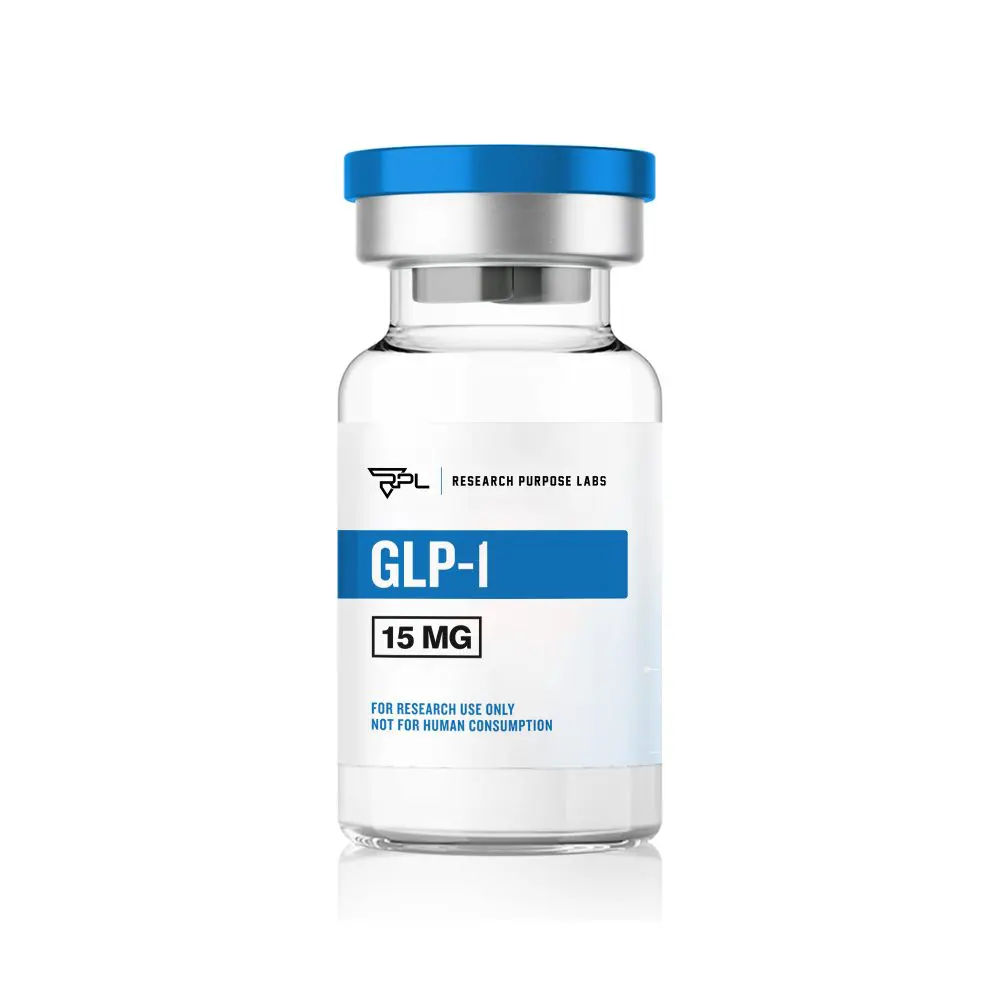
Finding is only the beginning of the sourcing process for a research laboratory. With numerous products and suppliers accessible online, researchers need a practical way to evaluate the information associated with materials before deciding whether they fit a particular project.
A useful approach is to work backward from the research protocol. Instead of beginning with a supplier or product listing, identify the material the project requires, determine which specifications and documentation matter, and consider the laboratory procedures that will apply once the material is received.
Research Purpose Labs provides peptide materials and product information within a laboratory-research context. This guide outlines considerations researchers can incorporate into their own sourcing process.
Key Takeaways
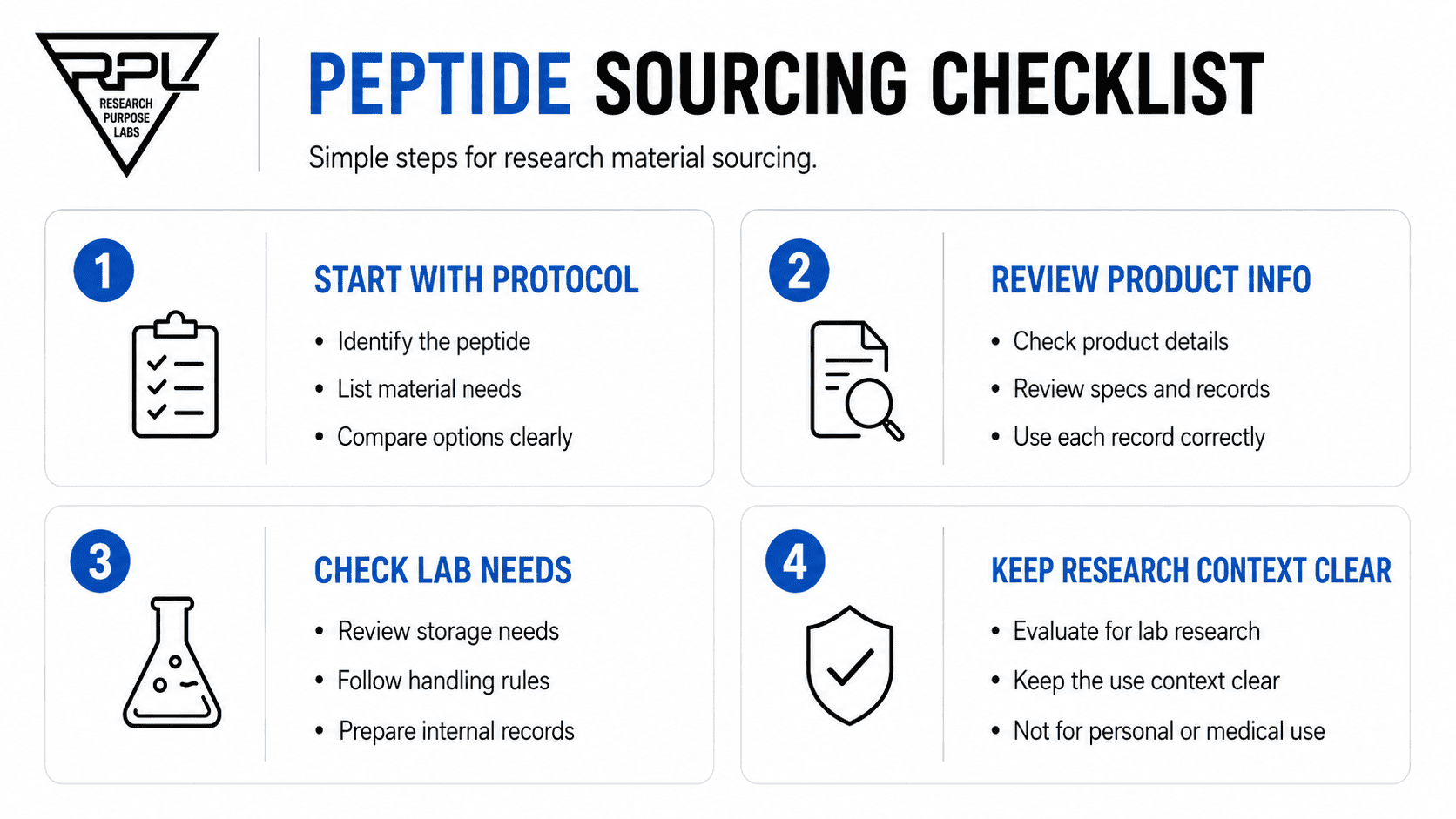
- Start with the research protocol. Identify the specific peptide and relevant material requirements before reviewing suppliers. This gives researchers a consistent framework for comparing available options.
- Review product information and documentation carefully. Consider product identification, specifications, intended-use information, and available records. Evaluate each piece of information according to what it actually establishes.
- Consider laboratory and institutional requirements. Storage, handling, documentation, and internal procedures may affect sourcing decisions. Researchers should account for applicable requirements before obtaining materials.
- Maintain clear research context throughout sourcing. Peptides presented for laboratory research should be evaluated within that stated context. Information concerning research materials should not be interpreted as guidance for personal or medical use.
Contact Us Today!
Why a Research Protocol Should Come First
Online sourcing can make it tempting to begin by browsing available products. For researchers, a more structured starting point is the project itself.
The research protocol can help determine which material is required and which characteristics are relevant to the work being conducted. Establishing those requirements before reviewing suppliers gives researchers a consistent basis for comparison.
When searching for peptides for sale online USA, researchers may encounter similar product names across multiple websites. Similar naming, however, should not replace a careful review of the actual material and available product information.
The central question is not simply whether a peptide is available. It is whether the material and accompanying information correspond with the requirements established for the research project.
Identify the Exact Material Required
Product identity is an important consideration when sourcing research materials.
Researchers should determine the exact peptide required by their protocol and review the identifying information provided with a prospective product. Depending on the project, additional specifications may also be relevant.
Creating a list of required information before searching can make comparison easier. Rather than changing evaluation standards from one supplier to another, researchers can apply the same project-specific criteria to each material they consider.
This can also help separate relevant technical information from promotional presentation.
Determine Which Documentation Matters
Not every laboratory or project has identical documentation requirements.
Before sourcing, researchers can identify which records their institution, laboratory, or research protocol expects them to maintain. They can then determine whether relevant information is available for the material under consideration.
Where product or batch-specific documentation is provided, researchers can evaluate what that documentation actually reports.
One document or analytical result should not automatically be treated as answering every question about a research material. The relevance of information depends on factors such as what was evaluated, which material or batch it concerns, and what the documentation actually establishes.
Evaluate Supplier Information Consistently
Searching for peptides for sale online USA can produce suppliers that organize and present their information differently.
Creating a consistent evaluation framework can make those differences easier to manage.
Researchers might consider:
- How clearly the material is identified
- Whether the intended use is stated
- Which product specifications are provided
- What documentation is available
- Whether storage information is supplied
- How supplier policies are communicated
- Whether product-related questions can be submitted to the supplier
These factors are not a universal checklist for determining whether a material is appropriate. Laboratories should establish criteria based on their own research requirements and applicable policies.
Understand the Limits of Scientific Literature
Researchers may encounter scientific publications while investigating a peptide. Those publications can provide information about the compound and areas in which it has been studied, but they should be interpreted according to the research actually conducted.
A publication involving a peptide does not automatically establish anything about a particular commercially available product or batch.
Research can also differ substantially in experimental model, formulation, methods, endpoints, and other characteristics. Findings from one setting should not automatically be transferred to another.
For sourcing purposes, researchers can distinguish between literature concerning a compound and documentation concerning the particular research material they are evaluating.
Keep Intended Use Clear
Peptides are discussed online across many different fields and contexts. This makes intended use particularly important when evaluating product information.
A material presented for laboratory research should be considered within that stated research context.
References encountered elsewhere to pharmaceutical development, healthcare, personal use, or other applications do not automatically change the intended use of a specific research product.
Likewise, laboratory product information should not be interpreted as instructions or guidance for personal use. Questions involving individual health, diagnosis, treatment, or medical decisions should be addressed by appropriately qualified healthcare professionals.
Prepare for Storage and Handling Before Ordering
Sourcing decisions should account for what happens after a material reaches the laboratory.
Researchers can review their procedures for receiving, identifying, documenting, storing, and handling incoming research materials before placing an order.
Where a supplier provides product-specific storage information, laboratories can review that information alongside their own protocols and institutional requirements.
Considering these practical requirements in advance can help researchers determine whether their laboratory is prepared to incorporate a particular material into the planned research workflow.
Maintain Product and Batch Records
Research materials may need to remain identifiable throughout a project.
Depending on laboratory procedures, records might include information such as:
- Product identification
- Supplier information
- Lot or batch reference
- Date received
- Associated product documentation
- Relevant internal records
A lot or batch number is an identifying reference; it should not by itself be interpreted as establishing the characteristics or suitability of a material.
Maintaining appropriate records can instead help preserve the connection between the material received and the research records associated with it.
Avoid Choosing a Supplier Based on Presentation Alone
Websites can vary considerably in design, terminology, product descriptions, and the amount of information they provide.
Professional presentation may make information easier to review, but appearance alone does not establish whether a particular material corresponds with a laboratory’s requirements.
The same caution applies to individual specifications, supplier statements, scientific papers, or analytical documents. Researchers can consider each piece of information for what it actually communicates rather than allowing one detail to substitute for the entire evaluation process.
A structured comparison based on predefined research requirements can provide a more consistent approach.
Include Institutional Requirements in the Decision
Laboratories may have internal requirements governing procurement, documentation, storage, handling, or other aspects of research materials.
Applicable requirements may also vary by institution, jurisdiction, research setting, and material.
Before sourcing, researchers should identify which policies and requirements apply to their particular work. A general online guide cannot determine the requirements applicable to every laboratory or research project.
Including institutional considerations from the beginning can make them part of the sourcing decision rather than an issue addressed only after materials arrive.
Develop a Consistent Research Sourcing Workflow
An effective sourcing workflow does not need to be complicated.
Begin with the research protocol and identify the required material. Determine which specifications and records are relevant. Establish evaluation criteria, then review prospective products and supplier information against those criteria.
Before obtaining materials, consider storage, handling, documentation, and applicable institutional procedures.
After receipt, maintain appropriate records connecting the material, batch information, documentation, and research project according to laboratory practices.
Using the same general framework for future projects can make online sourcing more systematic.
Contact Us Today!
Peptides for Sale Online USA for Laboratory Research
Researchers looking for peptides for sale online USA can review Research Purpose Labs for peptide materials presented within a laboratory-research context.
Product information can be evaluated alongside the requirements of the research protocol, laboratory procedures, institutional policies, and other considerations applicable to the project.
Explore available research materials at Research Purpose Labs and review the accompanying product information before making a sourcing decision.
The objective is not simply to locate a peptide online. It is to identify the material required by the project and evaluate the information available about that material within the appropriate research context.
Frequently Asked Questions
Q: What should researchers check before sourcing peptides online?
A: Researchers can begin with the research protocol, identify the specific material required, and establish which specifications and documentation matter to the project. Laboratory procedures and applicable institutional requirements should also be considered.
Q: Why should laboratories establish sourcing criteria in advance?
A: Predefined criteria provide a consistent framework for comparing materials and supplier information. This keeps the evaluation centered on project requirements rather than individual promotional elements.
Q: What role does product documentation play when evaluating peptides?
A: Documentation can provide information relevant to a research material, but researchers should evaluate exactly what each document addresses. A single record or analytical result should not automatically be interpreted as establishing every characteristic of a product.
Q: Does published peptide research apply to products sold online?
A: Not automatically. Scientific literature may investigate a compound under particular experimental conditions, but those findings do not by themselves establish the characteristics or suitability of a specific commercially available product or batch.
Q: Why does batch information matter?
A: Batch or lot information can provide an identifying reference for research materials. Laboratories can maintain that information with associated records when appropriate under their procedures.
Q: Are research peptides intended as medical guidance?
A: Product information presented for laboratory research should be considered within that research context and should not be interpreted as personal medical guidance. Individual questions concerning diagnosis, treatment, or health decisions should be directed to appropriately qualified healthcare professionals.
Q: Where can researchers find peptides for sale online USA?
A: Researchers can review Research Purpose Labs for peptide materials presented for laboratory research. Before selecting a material, researchers should consider the requirements of their protocol, available product information, laboratory procedures, institutional policies, and other applicable requirements.
No comment